
This easy Tuna Steak Recipe is ready in just 5 minutes. Packed with protein and low in carbs, seared tuna is perfect as a healthy weeknight dinner or a last-minute dish to impress family and guests.

If I had to choose between meat or fish, my answer would definitely be fish. At the restaurant I’d rather order a salmon fillet or baked cod fish over meat, especially if I’m having Japanese. Get me teriyaki tuna or some California rolls–maybe both–and you have my heart.
After sharing my go-to recipe for baked cod and fish cakes, I am now back with another simple seafood dish–pan seared tuna. It’s so quick and easy, basic I’d say, but it delivers the best result every time–lightly crusted outside with a rare inside and lots of flavor. The best thing is, it doesn’t taste fishy at all!
Why you will love this recipe
- Quick and easy – Tuna steaks cook in less than 5 minutes, making them perfect for a last-minute weeknight dinner. My recipe doesn’t require long marination or complicated techniques, just season and sear to perfection.
- Healthy and high protein – Packed with 39 grams of protein and omega-3 fatty acids, this dish is highly nutritious. It’s a low carb, high protein meal that fills you up without too many calories and fats.
- Customizable and versatile – Enjoy it plain with simple seasoning, or spice it up with marinades, crusts, and sauces. You can serve tuna steaks with baked potato, veggies, quinoa or grains. They’re perfect for casual dinners or holiday meals.
- Restaurant quality at home – With my recipe, you’ll get that perfect sear and tender inside just like at an expensive restaurant. You, your family or guests will all be amazed at how delicious your fish tastes.
Ingredients you’ll need
My basic tuna steak recipe requires just 4 ingredients. Here are more details, along with tips and substitutes–you can find precise quantities in the recipe card at the bottom.

- Tuna steaks (Ahi/Yellowfin) – Choose high quality tuna steaks, about 1 inch thick and 6 oz (170 g) each. I used ahi, but bigeye or bluefin tuna are also great for searing. To avoid food poisoning and bacteria, I recommend purchasing fresh fish from a trusted fishmonger or a reputable grocery store.
- Olive oil – Little oil helps create a crispy crust while keeping the loins juicy and flavorful. You can substitute with avocado oil, or use sesame oil for an Asian flavor.
- Seasonings – I find that salt and black pepper are enough to make tuna fish delicious. If you prefer, use kosher salt or Himalayan pink salt and swap black pepper for white pepper.
- Lemon juice – Although optional, I recommend squeezing a drop of fresh lemon juice on top of your cooked steaks. Lemon takes out the fish taste and enhances all flavors.
Frozen tuna steaks
As a more convenient and budget-friendly alternative, you can use frozen tuna steaks–though this requires some prepping. Before cooking, you’ll need to let the fish thaw completely in the fridge overnight. If you’re short on time, place the loins in a sealed plastic bag and submerge them in cold water for 30-45 minutes. Pat them completely dry with a paper towel, then cook as described in the recipe card below.
How to cook tuna steak
You can find the printable recipe at the end of this blog post, but for now here’s an overview with step-by-step pictures.
Step 1 – Prepare the tuna. Pat the tuna steaks dry with a paper towel. This removes excess moisture, ensuring the best possible sear. Brush lightly with olive oil on both sides, then season with salt and black pepper to taste.
Step 2 – Heat the skillet. Use a cast iron skillet or a heavy-bottomed pan. Heat over high heat until it’s smoking hot, without greasing the skillet with oil—this helps create a perfect crust.
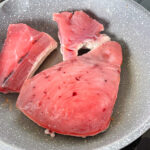
Step 3 – Sear tuna steaks. Place your tuna steaks in the pan and sear for 2-3 minutes per side. The outside should be golden brown while the inside remains pink and rare. Remove from the pan and let rest for a minute before serving.


When is a tuna steak ready?
Tuna steak is best served rare to medium-rare, with a raw or lightly cooked center. High-quality tuna is safe to eat raw, just like sushi, and quickly cooking it keeps its texture and flavor. You know it’s done when it reaches an internal temperature of about 115-120°F (you can measure it with a food thermometer).
If you prefer it well-done, cook it for only a few more seconds per side–but don’t overcook it. Cooking the fish for too long will make it dry and tough just like canned tuna packed in water.
Recipe variations
- Marinated tuna steak – Soak in soy sauce, lemon juice, and minced garlic for 30 minutes before cooking.
- Sesame crusted tuna – Swap olive oil for sesame oil and coat in sesame seeds before searing. Matteo’s tip–if you want to impress your guests, try a combination of white and black sesame seeds.
- Blackened tuna – Rub with Cajun seasoning, smoked paprika, cayenne, and garlic powder.
- Asian tuna steak – Drizzle with teriyaki sauce and serve with rice. For a twist, you can also swap the olive oil for sesame seed oil or peanut oil.
What type of tuna should I use?
There are several types of tuna on the market, each with its own flavor and best use. Some are leaner and lower in fats (liked the one I used), while others come from the fish belly and so are fattier. If you are wondering what to purchase, here’s an overview.
- Ahi tuna (Yellowfin) – Mild flavor, firm texture, and perfect for searing or grilling. This is the most widely available variety and works best for quick cooking methods.
- Bigeye tuna – Richer in fat, it’s great for sashimi and quick searing. In comparison to yellowfin tuna, it has a richer flavor.
- Bluefin tuna – The most premium variety, you can recognize it from its red color and intense flavor.
- Skipjack Tuna – Often used for canned tuna, it has a stronger taste and is best for grilling or marinating.
- Albacore Tuna – Lighter in color and milder in flavor, sometimes used in sashimi or grilling.
- Sashimi Tuna – This is the high grade raw tuna that most Japanese restaurants use for sushi, sashimi or tartare. Choose it if you’d like your tuna steak raw inside.
- Canned Tuna – A budget friendly option for salads and sandwiches but not good for searing. You’d rather keep it for protein-packed salads, wraps and rice bowls.

What to serve with tuna steaks?
- With vegetables – Pair with air fryer Brussel sprouts, a cauliflower steak, honey glazed carrots, fire-roasted tomatoes or a creamy cucumber salad. If you’re craving a cozier meal, enjoy with a bowl of Tuscan white bean soup or chickpea soup instead.
- With potatoes – For a more complete meal, serve with a baked potato or baked sweet potato, a microwave sweet potato or some leftover potato pancakes.
- With grains – Add a serving of complex carbs with basmati (try my quick microwave rice), wild rice, or quinoa. It goes well also with wholegrain pasta or a soft slice of homemade oat bread.
Storage directions
After cooling, store tuna steaks in an airtight container in the refrigerator for up to 2 days. To reheat, use a pan over low heat, but avoid overcooking. I do not recommend microwaving, as it can dry out the fish.
For a longer storage, let any leftover cool completely before wrapping it tightly in plastic wrap or placing it in an airtight container. Store it in the freezer for up to 3 months. To reheat, thaw in the refrigerator overnight and quickly warm it in a skillet over low heat, without overcooking

Frequently asked questions
Is tuna steak healthy?
Yes! Tuna steak is packed with lean protein, omega-3 fatty acids, and vitamins like B12 and D. It’s also low in fats and carbs, making it perfect for weight loss and keto diets.
Are tuna steaks supposed to be raw?
Tuna steaks are best served rare to medium-rare, with a raw or slightly cooked center. This keeps the fish tender, flavorful, and prevents it from drying out (we don’t want plain canned tuna, do we?).
Is it safe to eat rare tuna?
Yes, as long as you use high-quality fresh tuna, it is perfectly safe to eat rare. Think of sushi rolls and sashimi steaks. Cooking it lightly preserves its texture, and since tuna has low parasite risk, it’s safe when purchased from a reputable seller.
Tuna Steak
Ingredients
- 2 tuna steaks about 6 oz (170 g) and 1 inch thick
- 1 tbsp olive oil
- salt and black pepper to taste
- lemon juice optional
Instructions
- Pat the tuna steaks dry with a paper towel. Brush lightly with olive oil on both sides, then season with salt and black pepper to taste.
- Use a cast iron skillet or a heavy-bottomed pan. Heat over high heat until it’s smoking hot, without greasing the skillet with oil—this helps create a perfect crust.
- Place the tuna steaks in the pan and sear for 2-3 minutes per side. The outside should be golden brown while the inside remains pink and rare–avoid overcooking or they will get dry.
- Remove from the pan and let rest for a minute before serving. Enjoy immediately, with a squeeze of fresh lemon juice if desired.
Notes
- To store: Store leftover tuna steak in an airtight container in the fridge for up to 2 days. Reheat gently in a pan over low heat to avoid overcooking.
- To freeze: After cooking, let the tuna steak cool completely before wrapping it tightly in plastic wrap or storing in an airtight container. Freeze for up to 3 months. Thaw overnight in the fridge and warm briefly in a skillet.
- Use a HOT skillet – A smoking hot pan creates a perfect sear while keeping the inside tender and juicy.
- Don’t overcook – Tuna is best rare to medium-rare; cooking too long makes it dry and chewy. Remove from heat early, as it continues cooking off the pan.
- Season simply or get creative – Tuna tastes great with just salt and pepper, but you can spice it up it with marinades, sesame crusts, or Cajun spices for variety.
- Choose the right tuna – Ahi (Yellowfin) is the most common choice, but Bigeye and Bluefin are great too.
Nutrition
Per serving, estimated automatically, not a substitute for professional dietary advice.
 Matteo


Leave a Comment